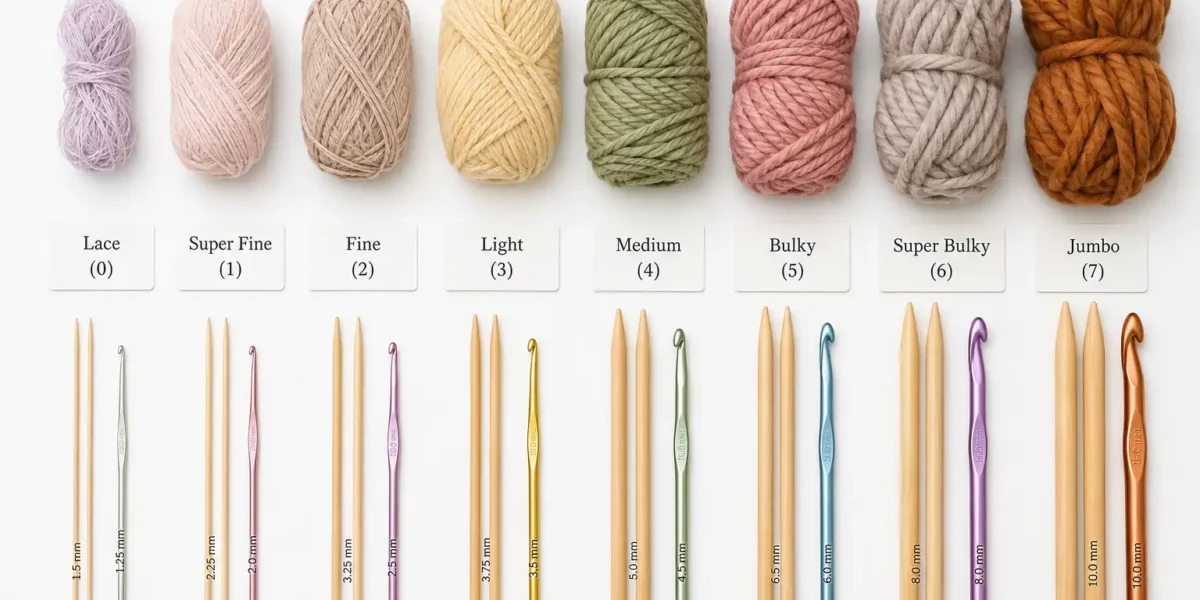
Yarn Weight Chart Crochet Guide: Complete Yarn Weights & Wool Thickness Guide
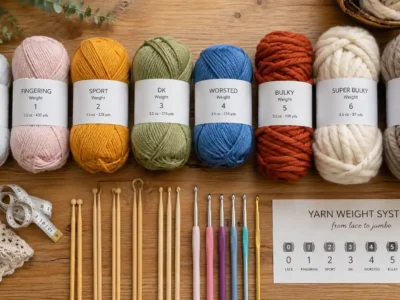
Every knitting and crochet project starts with one key decision: choosing the right yarn. The yarn weight chart is your most important tool for making that choice. It tells you how thick or thin a yarn is — and that affects everything from your gauge to your finished fabric. The Craft Yarn Council created a standard yarn weight system to help crafters worldwide speak the same language. This guide explains that system in plain, simple terms.
What Is Yarn Weight?
Yarn weight does not mean how heavy a skein is on a scale. Instead, it refers to the thickness of the yarn strand. A thicker yarn creates a chunkier, heavier fabric. A thinner yarn creates a finer, more delicate result.
Yarn weight directly affects your gauge — the number of stitches and rows you get per inch. Using the wrong weight for a pattern throws off gauge and changes the size, drape, and texture of your finished piece. Always match yarn weight to your pattern’s recommendation for the best results.
Complete Yarn Weight Chart
The table below follows the standard yarn weight system established by the Craft Yarn Council. Use it to quickly match yarn categories to the right needle and hook sizes.
| Weight Category | CYC Symbol | WPI Range | Knitting Needle Size (US) | Crochet Hook Size (US) |
|---|---|---|---|---|
| Lace | 0 | 30–40+ WPI | 000–1 (1.5–2.25 mm) | B-1 or smaller (2.25 mm) |
| Super Fine | 1 | 27–32 WPI | 1–3 (2.25–3.25 mm) | B-1 to E-4 (2.25–3.5 mm) |
| Fine | 2 | 23–26 WPI | 3–5 (3.25–3.75 mm) | E-4 to 7 (3.5–4.5 mm) |
| Light | 3 | 19–22 WPI | 5–7 (3.75–4.5 mm) | 7 to I-9 (4.5–5.5 mm) |
| Medium | 4 | 12–18 WPI | 7–9 (4.5–5.5 mm) | I-9 to K-10.5 (5.5–6.5 mm) |
| Bulky | 5 | 8–11 WPI | 9–11 (5.5–8 mm) | K-10.5 to M-13 (6.5–9 mm) |
| Super Bulky | 6 | 5–7 WPI | 11–17 (8–12.75 mm) | M-13 to Q (9–15 mm) |
| Jumbo | 7 | 4 or fewer WPI | 17 and larger (12.75+ mm) | Q and larger (15+ mm) |
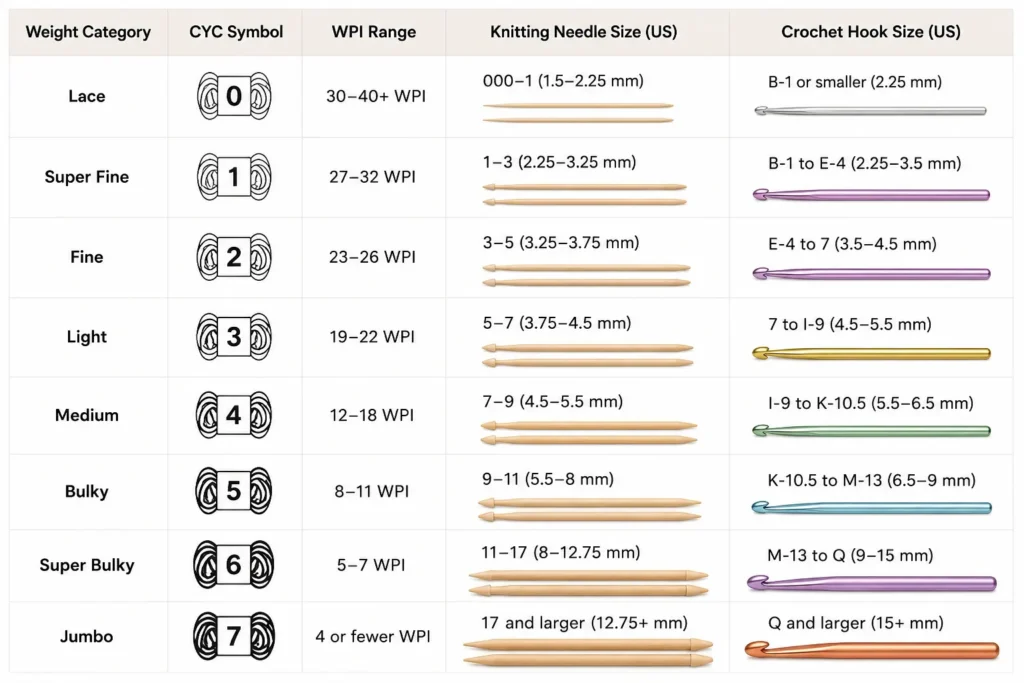
Quick tip: The number on the yarn label skein ball icon matches the CYC symbol column above. Look for it on every new yarn you buy.
Understanding Wraps Per Inch (WPI)
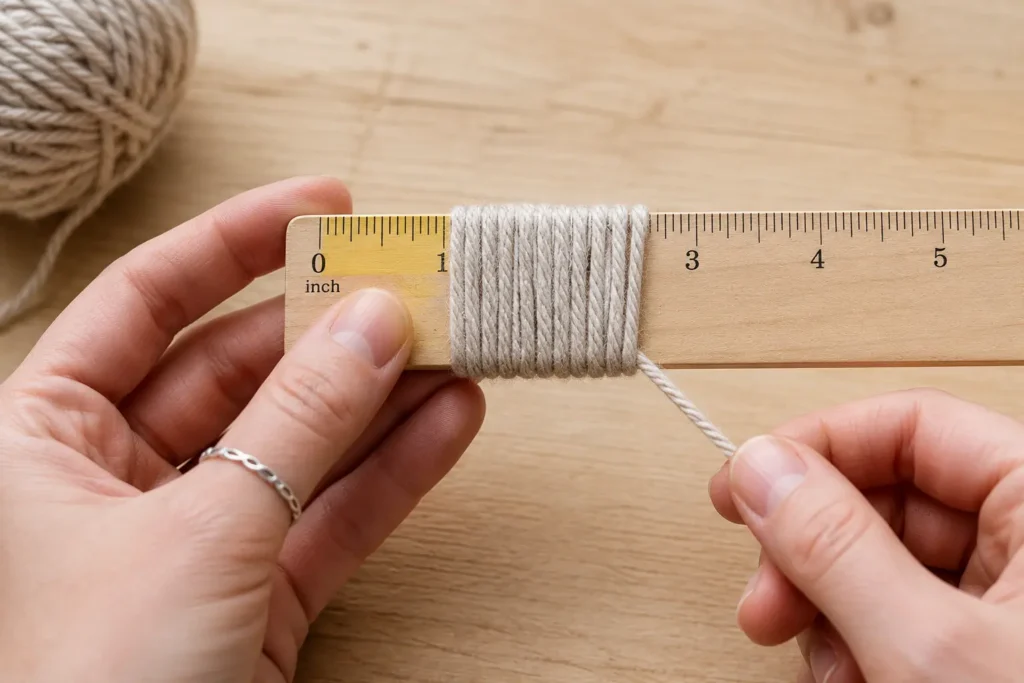
What is WPI? Wraps per inch (WPI) measures how many times a yarn wraps around a ruler or dowel within one inch. It gives you a precise, objective way to identify the weight of yarn — even when there is no label.
How to Measure WPI — Step by Step
- Hold a ruler or pencil horizontally.
- Wrap your yarn around it snugly — not stretched, not loose.
- Wrap for about 2–3 inches to get an accurate count.
- Count the number of wraps that fit in exactly one inch.
- Compare your number of wraps to the yarn weight chart above.
A higher number of wraps per inch means a finer, thinner yarn. Fewer wraps per inch means a thicker, heavier yarn. This method is especially useful when you find a mystery yarn without a label. Simply wrap it, count, and match it to the chart.
How to Read a Yarn Label
Every yarn label is packed with useful information. Here is what to look for:
- Weight category: Often shown as a number inside a skein icon (0–7), following the standard yarn weight system.
- Fiber content: Lists materials like wool, acrylic, cotton, or blends. Fiber affects drape, elasticity, and care.
- Recommended needle size: Printed as a US size and a metric size in millimeters.
- Recommended crochet hooks: Shown alongside or separately from needle sizes.
- Gauge information: Usually listed as stitches and rows per 4 inches (10 cm) on a recommended needle or hook.
- Yardage / meterage: Tells you how much yarn is in the skein. Always check this when substituting yarns.
Practical example: You pick up a skein labeled “Worsted / 4 / 200 yards / US 8 needle / 18 sts = 4 inches.” That tells you it is a medium weight yarn, suited for most everyday projects, and you will get 200 yards per skein. Use a Yarn Yardage Calculator to figure out how many skeins you need.
Yarn Weight Categories Explained
Lace Weight Yarns
Lace weight yarns are the finest yarns available. They are extremely thin — often a single ply — and produce gossamer-light fabrics. Lace yarns are ideal for delicate shawls, wraps, and intricate lace patterns. They work best on very small needles or hooks, usually size 000 to 1 (1.5–2.25 mm). Gauge is much finer with lace weight, so patience is key.
Fingering Weight
Also called sock weight, fingering yarn is slightly thicker than lace but still very fine. It is the go-to choice for socks, baby garments, and fine colorwork. Needles in the US 1–3 range (2.25–3.25 mm) work well. Fingering yarn also pairs with sock patterns requiring durability and detail.
Sport Weight Yarn
Sport weight yarn sits between fingering and DK. It is a versatile choice for lightweight sweaters, baby items, and accessories. Sport weight yarn typically uses US 3–5 needles (3.25–3.75 mm) and E-4 to 7 crochet hooks. It knits up faster than fingering but still produces a refined, light fabric.
DK Weight
DK (double knitting) yarn is slightly thicker than sport weight. It is one of the most popular choices in the UK and works well for garments, hats, and light accessories. US 5–7 needles (3.75–4.5 mm) are standard. DK offers a nice middle ground — not too fine, not too bulky.
Worsted Weight Yarn
What is worsted weight yarn? Worsted weight is a medium weight yarn, classified as CYC 4, that works on US 7–9 needles (4.5–5.5 mm) and produces approximately 16–20 stitches per 4 inches. It is one of the most widely used yarn weights and suits a huge range of projects.
Worsted weight is the backbone of everyday knitting and crochet. It is fast to work up, easy to handle, and widely available. Use it for sweaters, blankets, scarves, hats, and home décor projects.
Medium Weight Yarn
Medium weight yarn covers the entire CYC 4 category, which includes worsted and some Aran-weight yarns. It is the most common weight found in craft stores. When a pattern simply says “medium weight yarn,” it usually means something in the worsted to Aran range.
Bulky Yarn
Bulky yarn (CYC 5) works on US 9–11 needles (5.5–8 mm) and K-10.5 to M-13 crochet hooks. It creates thick, cozy fabrics quickly. Bulky yarn is perfect for warm winter hats, chunky cowls, and quick-knit blankets. Beginners often enjoy bulky yarn because stitches are easy to see.
Super Bulky Yarn
Super bulky yarn (CYC 6) is noticeably thicker than bulky. It uses large needles in the US 11–17 range (8–12.75 mm) and M-13 to Q crochet hooks. Projects knit up very fast. Arm knitting and large-scale blankets are popular uses for super bulky yarn.
Jumbo Yarn
Jumbo (CYC 7) is the thickest standard yarn category. It requires US 17+ needles (12.75 mm and above) or Q+ crochet hooks. Jumbo yarn is used for extreme arm knitting, giant blankets, and statement décor pieces. Gauge is very open and loose, creating a dramatic, textured look.
Choosing the Right Yarn Weight for Your Project
Knitting Projects
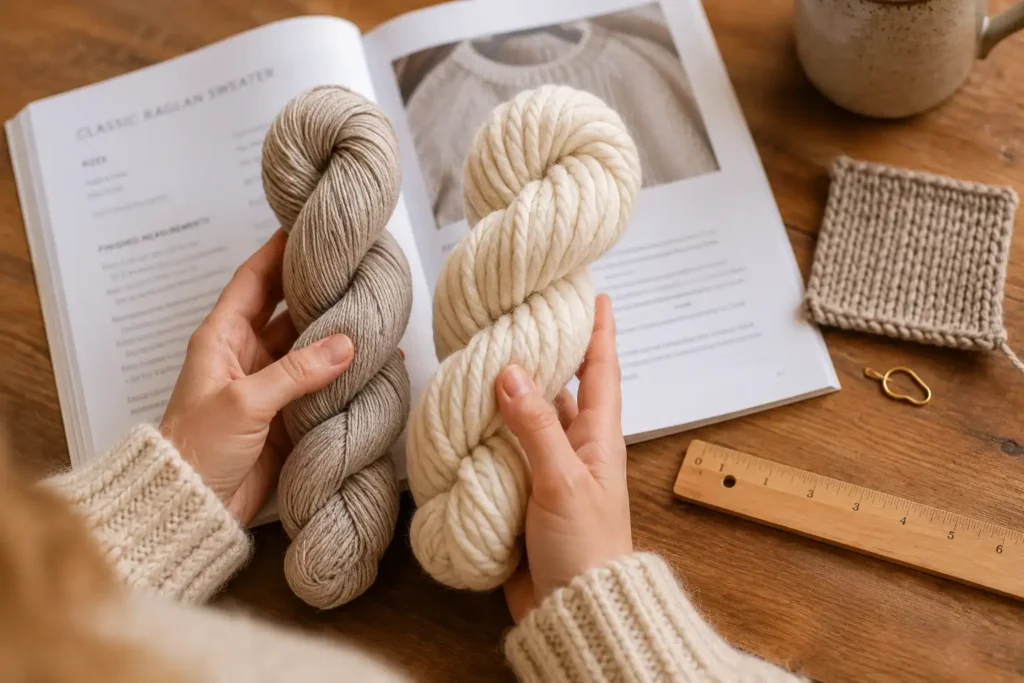
Always start with your pattern. Most knitting patterns specify an exact yarn weight and a gauge swatch requirement. Match your yarn to the recommended weight, knit a gauge swatch, and adjust needle size until your stitch count matches.
Common beginner mistakes include skipping the swatch and guessing yarn weight by how a skein looks. Both lead to ill-fitting garments. When substituting one yarn weight for another, use a Gauge Calculator to adjust your stitch counts.
Crochet Projects
Crochet patterns work the same way. The pattern lists a recommended yarn weight and hook size. The right crochet hooks make a real difference in achieving correct gauge. A hook that is too large creates a loose, floppy fabric. A hook that is too small makes fabric stiff and tight.
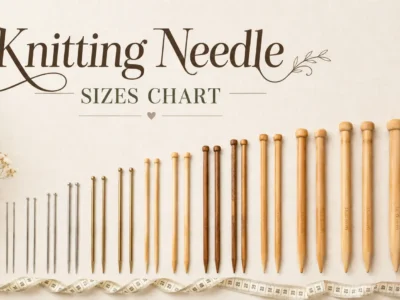
Also check the Needle Size Conversion Chart and Knitting Needle Size Chart when working with metric or international patterns.
Can You Combine Multiple Strands?
Yes — holding multiple strands together is a simple way to change the weight of yarn you have on hand. Combining yarn changes its effective thickness and gauge. Here are a few common combinations:
- 2 strands of fingering yarn held together ≈ sport weight yarn
- 2 strands of sport weight yarn held together ≈ worsted weight yarn
- 2 strands of DK yarn held together ≈ bulky yarn
The classic “fingering sport worsted” progression shows how doubling up moves you up the weight chart. For example, knitting with two strands of fingering creates a fabric similar to sport weight. Two strands of sport approximate worsted. Always re-swatch when combining strands, as fiber content and twist affect the final result.
This technique is a great way to use up yarn scraps or work with thinner yarns when a thicker weight is called for.
Frequently Asked Questions
What is the most common yarn weight?
Worsted weight (CYC 4) is the most popular yarn weight. It is widely available, works up quickly, and suits countless knitting and crochet projects — from scarves and hats to sweaters and home décor.
What is WPI in yarn?
WPI stands for wraps per inch. It is a measurement of how many times a yarn wraps around a ruler in one inch. More wraps mean thinner yarn; fewer wraps mean thicker yarn. WPI is especially useful for identifying unlabeled or mystery yarn.
Can I substitute one yarn weight for another?
You can sometimes substitute yarn weights, but it requires adjusting needle or hook size, stitch counts, and yardage. Always knit or crochet a gauge swatch with the substitute yarn. Use a Gauge Calculator to make accurate adjustments.
How do I know my yarn weight?
Look for the CYC yarn-weight symbol, numbered 0–7, on the label. For unlabeled yarn, measure wraps per inch (WPI) and compare your result with the chart above.
What yarn weight is best for beginners?
Worsted or bulky weight (CYC 4 or 5) are best for beginners. The thicker strands are easy to see, stitches are simple to count, and projects work up quickly which keeps motivation high. Pair with US 8–10 needles or an I-9 to K-10.5 crochet hook.
Conclusion
Understanding yarn weight categories is one of the most valuable skills you can develop as a knitter or crocheter. Reading your yarn label correctly, measuring wraps per inch when needed, and matching yarn to your pattern’s recommended weight all lead to better, more consistent results. Whether you are working with delicate lace weight yarns or cozy super bulky, the standard yarn weight system gives you a reliable roadmap.
Knitting Chart Maker
Design stitch patterns visually — no software needed.
Try It FreeFree · No sign-up required
Join Our Crafting Community
Follow GaugeGenie for daily yarn inspiration, pattern tips, and free calculator updates — wherever you craft.