How many grams in a skein of yarn? There is no single amount. Read the gram quantity on that product’s label: the word skein describes a way yarn is packaged, not a standard mass. A 100 g package contains 100 g of yarn as its stated quantity, but another product can be sold in a different amount.
Keep two other label details separate: the yarn weight category describes thickness, while the metres or yards describe length. Understanding those three numbers makes it much easier to compare yarn, estimate leftovers and follow a pattern’s materials list.
How many grams in a skein of yarn should you expect?
Expect the amount stated for the individual product, rather than assuming every skein is 100 g. Check the ball band, original product page or supplier’s specification.
Even one manufacturer’s range can use different package sizes. For example, Stylecraft Special DK is specified as 100 g / 295 m, while Stylecraft Special XL is 200 g / 136 m. These are maker specifications checked on 28 October 2026, not measurements taken from our own samples.
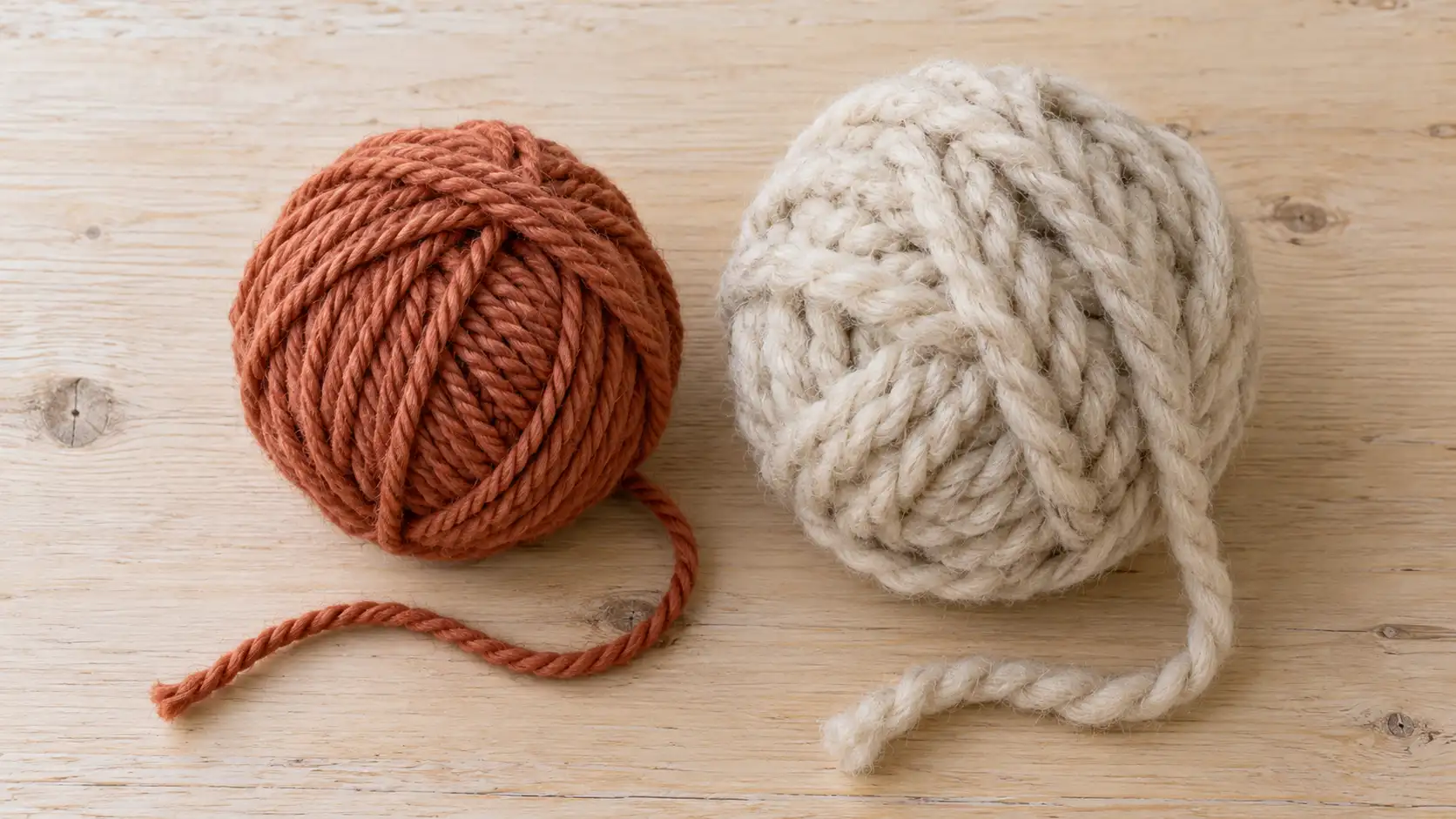
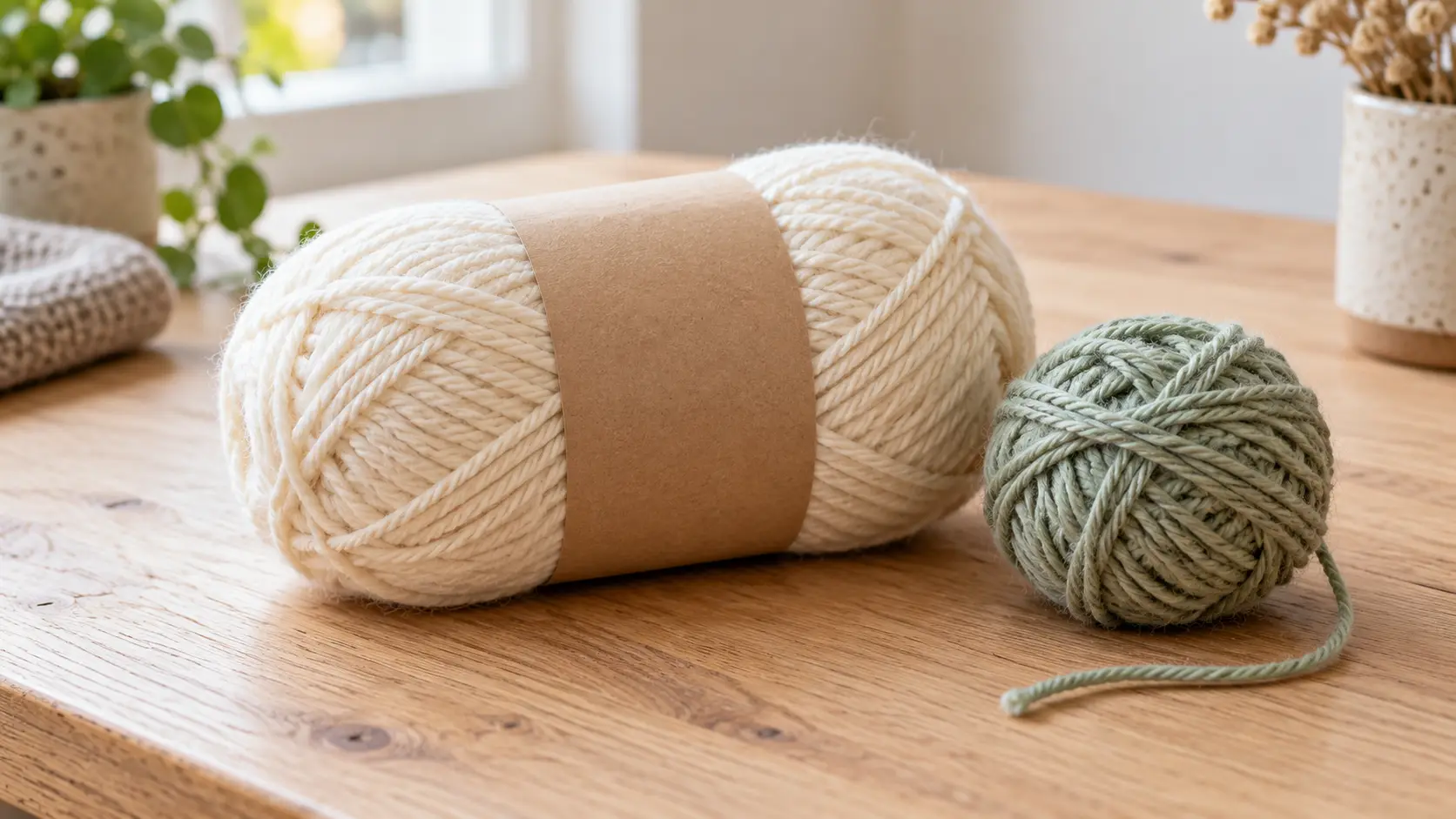
Yarn may be sold as a ball, skein, hank or cake. A different winding shape does not give you a universal gram amount. Save the actual label when you rewind yarn into a cake so you retain its quantity and identification.
Grams, yarn weight and yardage mean different things
| Label information | What it tells you | What it does not tell you by itself |
|---|---|---|
| Grams or ounces | Stated mass of yarn in the package | Thickness category or total length |
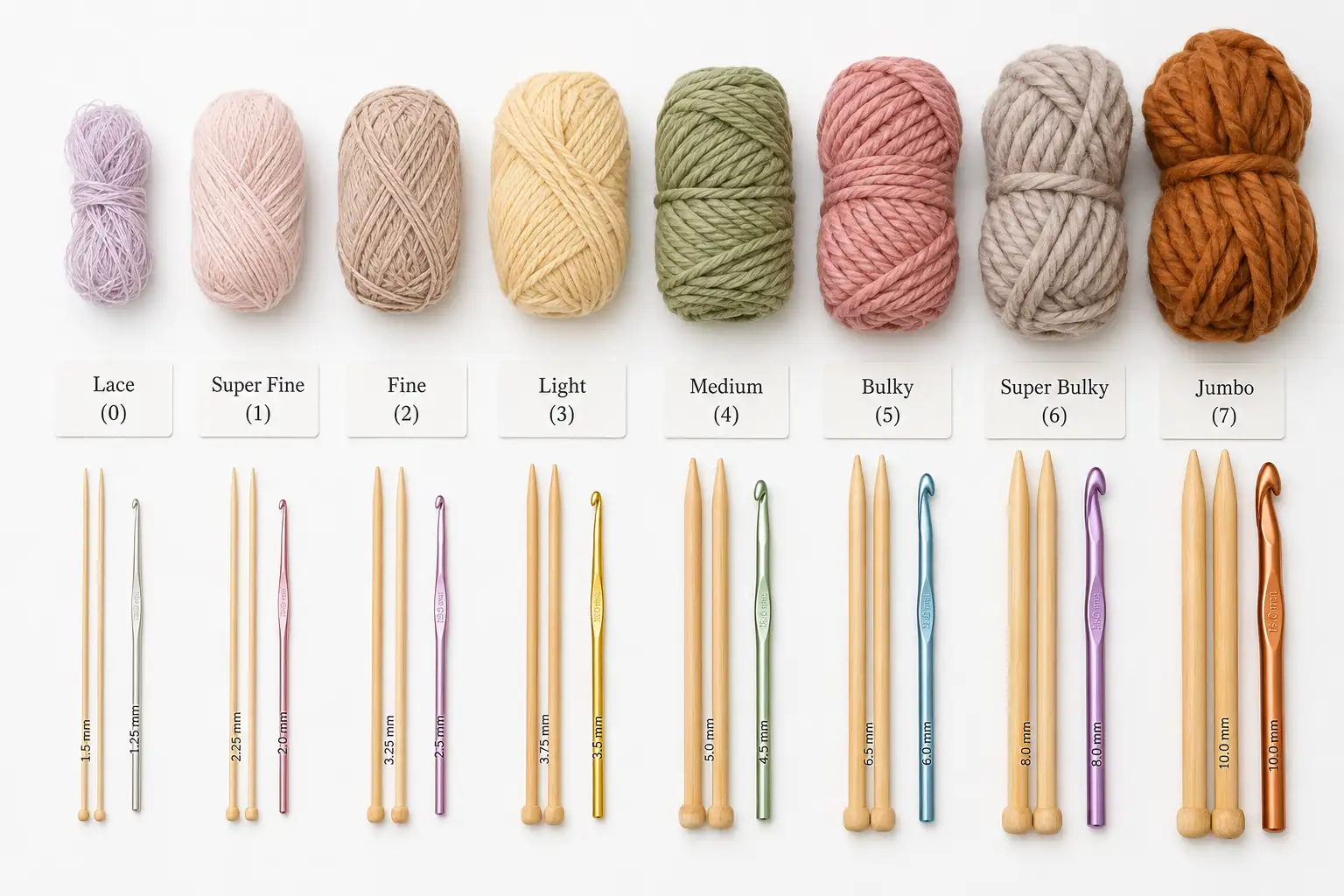
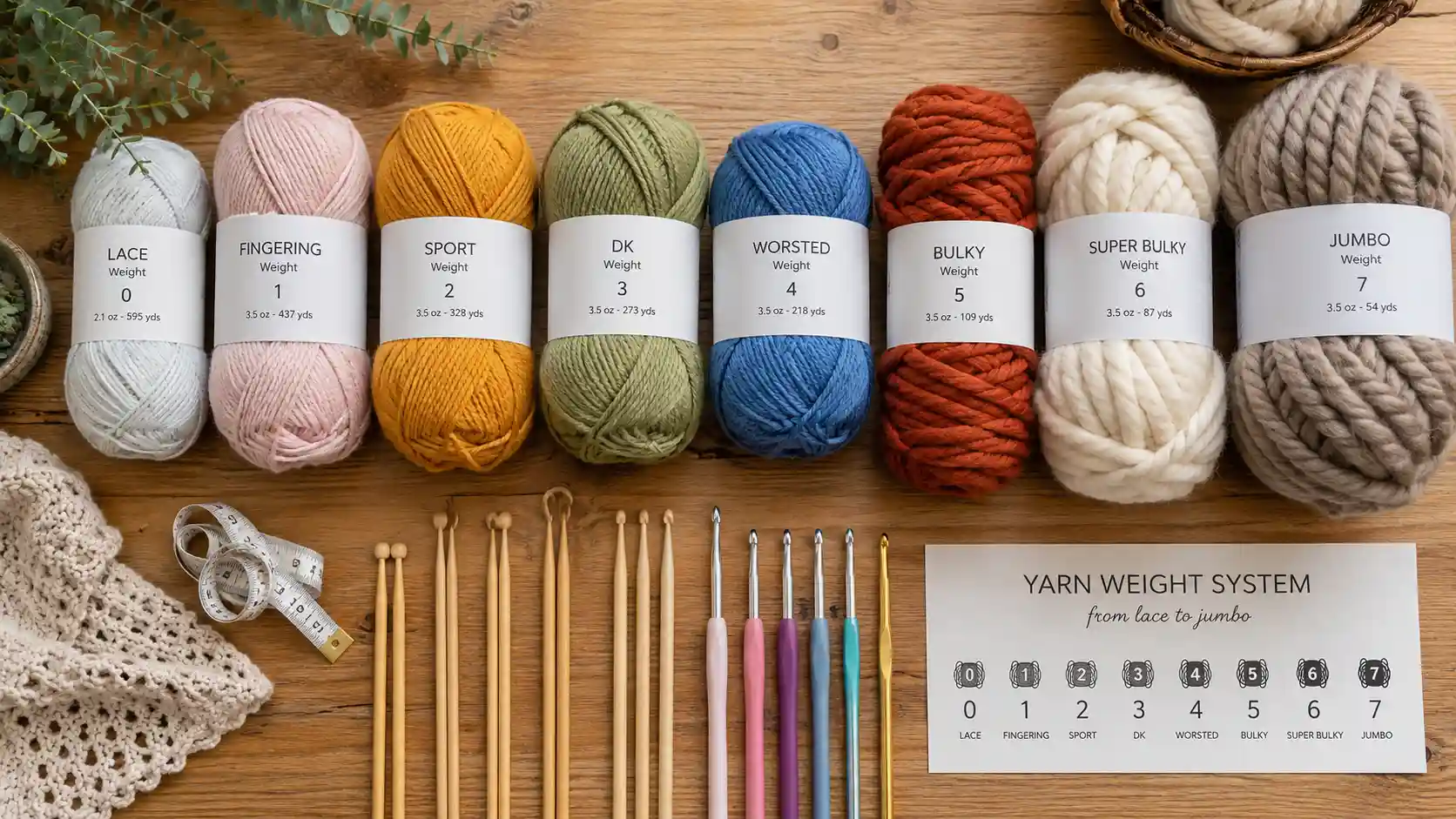
| DK, bulky, or a category number | A yarn thickness group | How many grams the package contains |
| Metres or yards | Length of yarn supplied | Whether it will match your pattern’s gauge |
| Needle and gauge information | A reference for making fabric | A guaranteed result for every knitter |
If a label says 100 g, that is different from a weight-category symbol such as 3 / Light. Do not read the category number as grams or the mass as a needle-size instruction.
For help identifying thickness, use the yarn weight guide. For a project quantity, start with the pattern’s required length and the actual length per package.
Read the useful parts of the label together
Before throwing away a band, copy or photograph these details:
- Brand and yarn name, so you can recover the specification later.
- Net yarn mass and its matching length, including the units.
- Fibre content and care instructions.
- Colour number and dye lot, when provided.
- Weight group, suggested needle and reference gauge.
Keep the mass and length from the same product and package size. A metre count from a 50 g version cannot be paired with the 100 g mass of another listing. Some colourways or versions can have different specifications, so check the version you own.
Be careful with multipacks and shipping listings. A parcel’s weight is not the yarn’s net quantity, and a pack total is not necessarily the amount in each individual ball.
Does 100 g always contain the same number of metres?
No. Consider two current maker examples:
| Yarn | Stated mass | Stated length |
|---|---|---|
| Stylecraft Special DK | 100 g | 295 m |
| Stylecraft Special Chunky | 100 g | 144 m |
The second specification comes from Stylecraft Special Chunky. The same package mass supplies different lengths. There is no universal conversion that turns any 100 g of yarn into a fixed number of metres or yards.
When you compare a substitute, check thickness, fibre, construction and gauge as well as length. Matching metres per gram alone does not prove that two yarns will produce the same fabric.
Estimate the length of a partial skein
Example: Estimating leftover yarn
Assuming the same yarn and a reliable mass measurement.
You can make a useful estimate when you know the original yarn’s mass-to-length specification and can weigh the remaining yarn alone.
Remaining length = remaining yarn mass × labelled length ÷ labelled mass.
Here is a hypothetical example, not a measurement of a named product. A label states 200 m per 100 g, and you have 35 g of that yarn remaining:
- Divide 200 m by 100 g to get 2 m per gram.
- Multiply 35 g by 2 m per gram.
- The estimated remaining length is 70 m.
Keep all masses in the same unit and all lengths in the same unit. You can use yards throughout instead of metres if the label and your pattern use yards.
Weigh yarn without its packaging
Use a suitable scale on a stable surface. If you use a container, tare the scale with the empty container first. Remove a removable paper band, loose accessories or a centre tube from the measurement where practical; otherwise you are weighing more than yarn.
Do not treat a tiny reading from a coarse scale as exact. The labelled length is also a reference value, so the result is an estimate. If your project needs almost every remaining metre, leave room for uncertainty rather than relying on a rounded answer down to the last stitch.
What if the yarn has no label?
Weighing an unknown ball tells you its mass. It does not establish its original length, fibre or thickness category.
First try to identify it from your purchase record, project notes or a saved band. If it is the same known yarn as another labelled ball, confirm the product and version before using that specification.
If the yarn cannot be identified, do not use a random yarn’s metres-per-gram ratio. For a small, non-critical project, you can plan around the material you have and its measured fabric. For a fitted pattern or a project with tight quantity requirements, choose a yarn with a known specification or obtain a more reliable length estimate before starting.
Turn a pattern’s required length into whole balls
Suppose a pattern requires 360 m for your chosen size. These are hypothetical package sizes:
| Length in each ball | Calculation | Whole balls to cover 360 m |
|---|---|---|
| 120 m | 360 ÷ 120 = 3 | 3 |
| 200 m | 360 ÷ 200 = 1.8 | 2 |
Round up when purchasing whole balls. The table covers the stated 360 m only; it does not include an extra allowance for swatching, longer sleeves, altered dimensions, mistakes or other changes.
Use the pattern’s size-specific requirement and check whether its instructions already discuss extra yarn. Our yarn yardage calculator guide covers that broader planning process, and the yardage calculator can help with estimates once your inputs are known.
Matching a ball count without checking its length is a common mistake. “Three balls” describes a useful quantity only when you know what is in each ball.
Frequently asked questions
Is one skein always 100 grams?
No. Use the quantity listed for the specific yarn. Do not infer the mass from the package shape or from another product in the same shop.
How many skeins make 100 g?
Divide 100 g by the stated grams per skein. For example, two hypothetical 50 g skeins total 100 g. This calculation says nothing about the yarn’s total length unless you also know its specification.
Is a 100 g ball thicker than a 50 g ball?
Not necessarily. Those figures describe package mass. To compare thickness, read the yarn weight group and reference gauge, then check suitability for your pattern.
Can I convert grams of yarn straight into yards?
Only when you have a relevant mass-to-length ratio for that yarn, or another reliable measurement. Grams and yards measure different things. There is no single conversion factor for every yarn.
Should I include the ball band when weighing leftovers?
For a mass-based length estimate, measure the yarn alone. Packaging adds mass that does not contribute usable yarn length. Tare any container and account for a removable core too.
Can I substitute the same number of skeins?
Check the length in each skein first, along with gauge and fabric suitability. Two products sold in the same gram quantity can have different lengths, so equal skein counts may leave you short.
Keep the band with the leftovers
Put the yarn name, colour, lot and original mass-to-length specification in the storage bag. Add the measured remaining mass when you finish the project. That gives you a practical starting point when you want to use the leftovers later.