Beginner’s Yarn Guide – So, you’ve decided to learn knitting or crochet! That’s exciting! But when you walk into a craft store and see walls of colorful yarn, it can feel pretty overwhelming, right? Don’t worry – you’re not alone. Every knitter and crocheter has stood exactly where you are now, staring at hundreds of yarn choices and wondering where to start.
This guide is here to help you understand yarn from the ground up. We’ll talk about what all those numbers and terms mean, how to pick the right yarn for your project, and most importantly, how to avoid common mistakes that can make your first projects frustrating. Think of this as a friendly conversation about yarn – no confusing jargon, just straightforward advice to get you started.
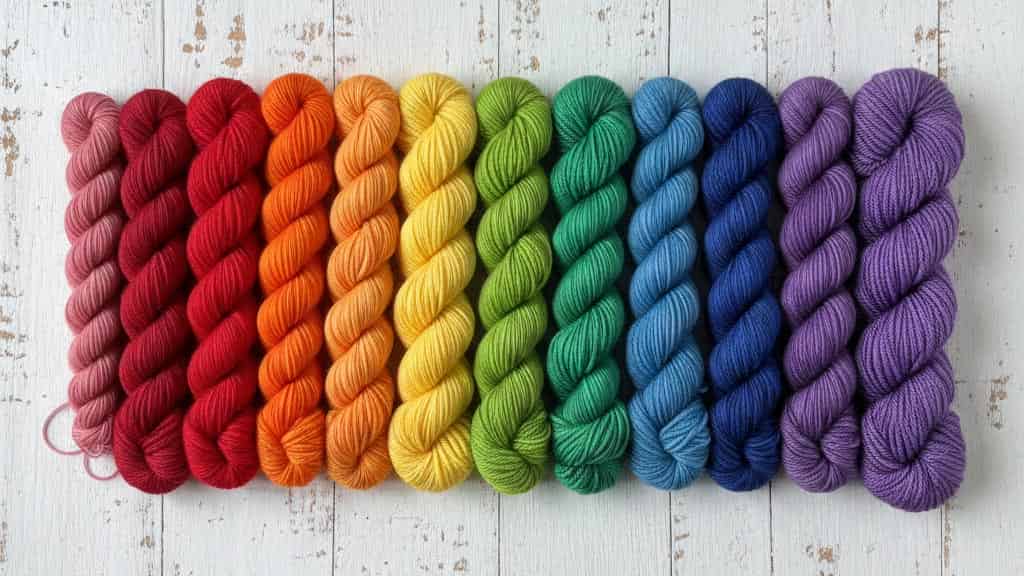
What Exactly Is Yarn Weight? (And No, It’s Not About Pounds!)
Here’s something that confuses almost everyone at first: yarn “weight” doesn’t mean how heavy the yarn is. I know, I know – that seems backwards! What it actually means is how thick or thin the yarn strand is. A thin, delicate yarn is called “lightweight,” while a thick, chunky yarn is called “heavyweight.”
Think of it like this: spaghetti is thinner than fettuccine, right? Same idea with yarn. Some yarn is thin like thread, and some is thick like rope. The thickness determines what size needles you’ll use and how your finished project will look and feel.
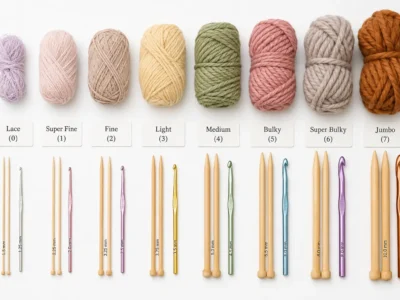
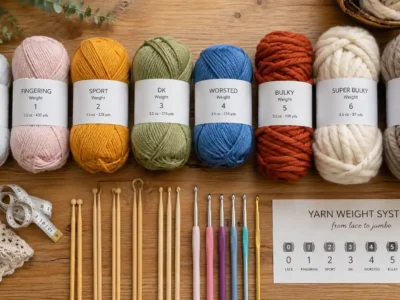
The Craft Yarn Council (basically the people who organize yarn standards) has created a numbering system from 0 to 7. Zero is super thin and delicate, while 7 is seriously chunky. Most beginners start somewhere in the middle – around 4, which is called “worsted weight.” It’s like the Goldilocks of yarn: not too thin, not too thick, just right for learning.
Now, here’s something really important: when you’re working on any project, you need to make sure your stitches are the right size. This is called “gauge,” and honestly, it’s one of those things that seems boring but actually matters a lot. If you want to check whether your stitches are the right size, try our gauge calculator – it takes about 30 seconds and can save you hours of frustration later.
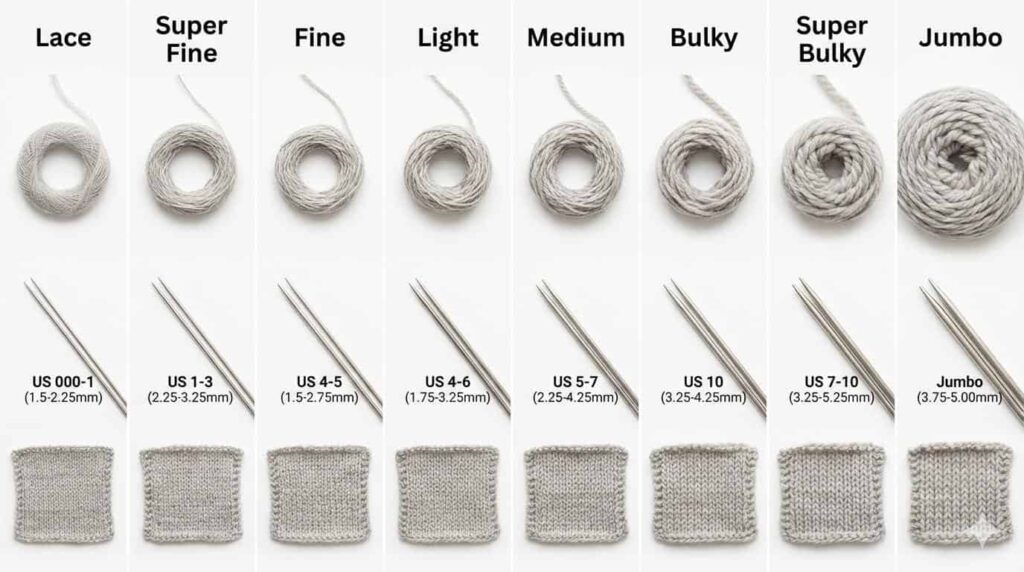
Let’s Break Down Those Yarn Weights
Okay, let’s get into the specific types of yarn you’ll see. I promise this isn’t as complicated as it looks!
Lace and Fingering Weight (0-1)
These are the really thin yarns – we’re talking delicate and wispy. Lace weight is about as thin as sewing thread, and fingering weight is just slightly thicker. These create beautiful, lightweight fabrics that drape gorgeously, like the kind of shawl that can fit through a wedding ring.
But here’s the thing: these require patience. Like, a lot of patience. Your progress will be slow because you’re working with tiny stitches. If you’re brand new to knitting or crochet, I’d suggest saving these for later when you’ve got more experience under your belt. Your future self will thank you!
Sport and DK Weight (2-3)
Now we’re getting into more beginner-friendly territory! Sport weight is thin but not crazy-thin, making it great for baby clothes, socks, and lightweight sweaters. DK stands for “double knitting” (don’t ask me why – it’s just one of those craft tradition things), and it’s a tiny bit thicker than sport weight.
These weights are pretty versatile. You can make everything from delicate baby blankets to everyday wearable items. They work up faster than the super-thin yarns but still give you nice stitch definition, which means you can actually see the pattern you’re creating.
Worsted and Aran Weight (4)
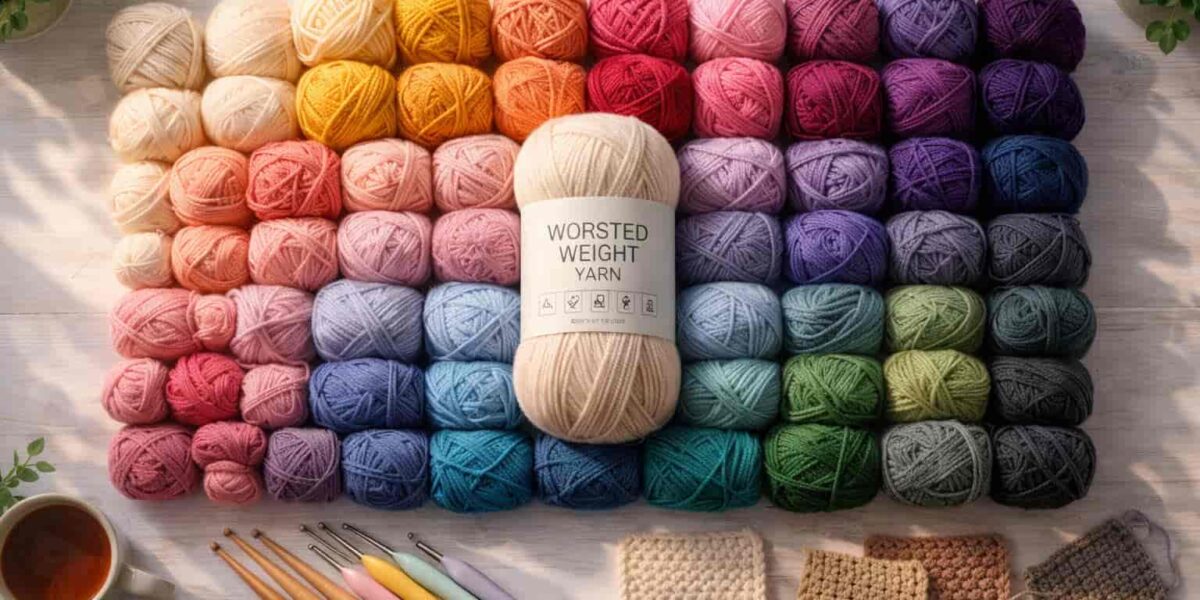
Here’s your sweet spot for beginners! Worsted weight is hands-down the most popular yarn weight out there. You’ll find it everywhere, from big box stores to your local yarn shop. It’s thick enough that you can see your stitches clearly (which helps when you’re learning), but not so thick that you lose all the detail in your work.
This is the yarn weight I recommend for your very first project. Scarves, blankets, hats, sweaters – you can make pretty much anything with worsted weight yarn. Plus, most free patterns online are written for worsted weight, so you’ll have tons of options.
When you’re working on bigger projects like blankets, keeping track of your rows can get tricky. That’s where our stitch counter comes in handy – it’s way easier than trying to count hundreds of rows by hand!
Bulky and Super Bulky (5-6)
If you want instant gratification, this is your yarn! Bulky and super bulky yarns are thick and chunky, which means your projects work up really, really fast. We’re talking a scarf in an evening or a baby blanket in a weekend.
This is actually another great option for beginners because you can see results quickly, which keeps you motivated. There’s nothing worse than working on something for weeks and feeling like you’re getting nowhere. With chunky yarn, you’ll be posting your finished project on social media in no time!
These weights are perfect for cozy winter items – think thick blankets you can cuddle under, chunky scarves, and those trendy oversized beanies you see everywhere.
Jumbo Weight (7)
This is the really big stuff – like, arm-knitting big. We’re talking super chunky blankets and those massive knit throws you see on Pinterest. Honestly, as a beginner, you probably won’t use this much. It’s a specialty yarn for specific projects, and it can be expensive because you need so much of it.
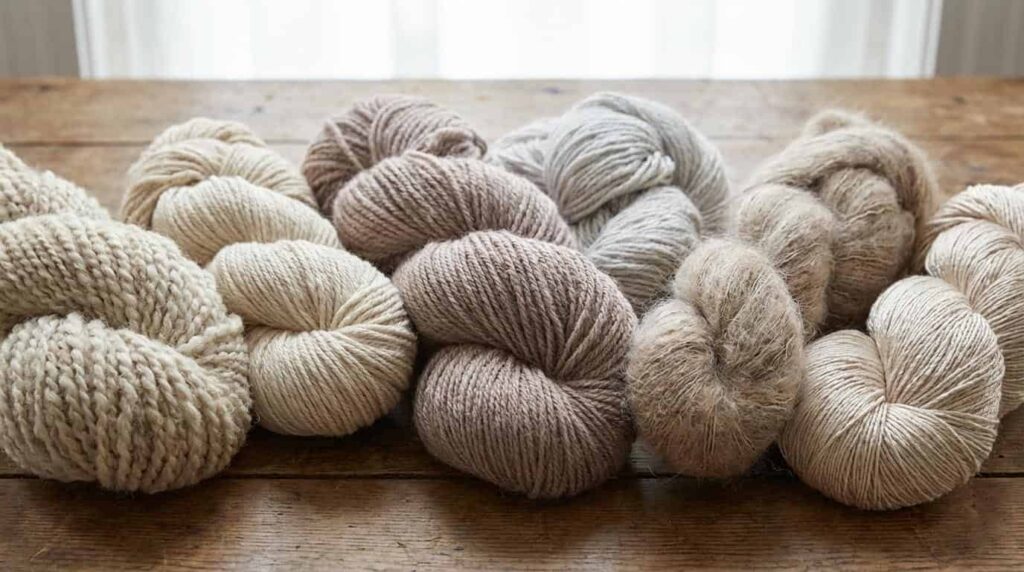
What’s Your Yarn Actually Made Of?
Okay, so we’ve talked about thickness. Now let’s talk about what yarn is actually made from. This matters because different fibers feel different, wash differently, and work differently. Some are warm, some are cool, some are stretchy, some aren’t. Let’s break it down.
Animal Fibers (The Cozy Ones)
Wool is probably what you think of when you imagine yarn. It comes from sheep, and it’s honestly amazing stuff. Wool is warm, naturally water-resistant, and – here’s the cool part – it’s “elastic,” which means it bounces back when you stretch it. This elasticity is super forgiving for beginners because if you accidentally pull a stitch too tight or too loose, wool tends to even out and hide your mistakes.
The downside? Some people are allergic or sensitive to wool, and it usually needs to be hand-washed. But for learning, wool is fantastic. It’s like the yarn is working with you instead of against you.
Alpaca comes from those adorable fluffy animals that look like fancy llamas. Alpaca yarn is incredibly soft and warm – warmer than wool, actually. But it’s not as stretchy as wool, which means it can grow and stretch out over time, especially in things like sweaters. It’s lovely, but maybe not the best choice for your very first project.
Cashmere and Mohair are the luxury options. Cashmere comes from goats and is buttery-soft and expensive. Mohair also comes from goats and has a fuzzy, halo effect that’s really pretty. Both are beautiful, but let’s be real – you don’t want to learn on expensive yarn. Save these for when you’re more confident and won’t accidentally turn a $50 skein of cashmere into a lumpy mess.
Silk is smooth, shiny, and drapes beautifully, but it’s slippery to work with and doesn’t have much stretch. Not ideal for beginners, but gorgeous in blends with other fibers.
Plant Fibers (The Breathable Ones)
Cotton is fantastic for so many reasons. It’s cool and breathable (perfect for summer), machine-washable (yes, please!), and usually pretty affordable. Cotton is great for dishcloths, market bags, summer tops, and baby items.
The thing about cotton is that it has zero stretch. None. This means you need to be more consistent with your tension (how tightly you hold the yarn), because cotton won’t forgive uneven stitches the way wool does. But for practical, everyday items, cotton is amazing.
Bamboo is made from bamboo plants and has a beautiful silky feel. It’s breathable like cotton but drapes even more beautifully. It’s a bit slippery though, which can make it tricky for beginners.
Linen is crisp and gets softer with every wash. It’s perfect for summer garments and kitchen items, but it has no stretch at all and can be stiff to work with at first. Like bamboo, probably not your first choice when you’re learning.
Synthetic Fibers (The Practical Ones)
Acrylic is going to be your best friend when you’re starting out. Here’s why: it’s cheap, it comes in every color imaginable, it’s machine-washable, and it’s widely available. You can find acrylic yarn at literally any craft store, big box store, or even some grocery stores.
Now, acrylic gets a bad rap in some crafting circles. Yarn snobs will tell you it’s “cheap” or doesn’t feel as nice as natural fibers. And yeah, the cheapest acrylic can feel a bit squeaky or stiff. But here’s the truth: when you’re learning, you’re going to make mistakes. You might need to rip out your work and start over. You might realize halfway through that you hate the project. That’s totally normal and part of learning!
Would you rather make those mistakes with a $5 skein of acrylic or a $25 skein of alpaca? Exactly. Learn on acrylic, then treat yourself to the fancy stuff once you know what you’re doing.
Plus, modern acrylic yarns have come a long way. Brands are making acrylic that feels soft and nice, washes well, and looks great. It’s perfect for afghans, scarves, hats, and especially anything you’re making for charity or kids (because machine-washing is a must).
Nylon is usually blended with other fibers to add strength. You’ll see it in sock yarn (because socks take a beating) and in wool blends. It’s not usually sold on its own.
Blends (The Best of Both Worlds)
A lot of yarn is actually a blend of different fibers. Like 80% wool and 20% nylon, or 50% cotton and 50% acrylic. Blends combine the good qualities of different fibers – like the warmth of wool with the washability of acrylic, or the softness of alpaca with the strength of nylon. As you gain experience, you’ll learn which blends you like best.
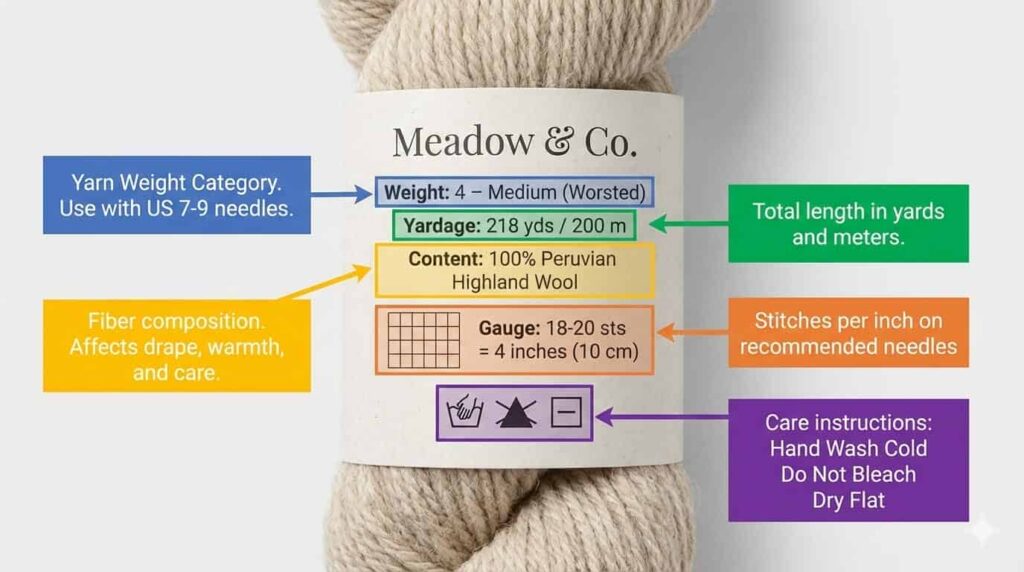
How to Read a Yarn Label (It’s Like a Secret Code!)
Every ball or skein of yarn has a label wrapped around it, and that label is packed with information. At first, it looks like a bunch of random numbers and symbols, but once you know what you’re looking at, it’s actually super helpful. Let’s decode it together.
Yarn Weight and Category This is usually shown as a number (0-7) inside a little skein icon. This tells you how thick the yarn is. You’ll also see the weight written out in words, like “worsted” or “bulky.”
Fiber Content This tells you what the yarn is made of. It might say “100% Acrylic” or “80% Merino Wool, 20% Nylon” or “50% Cotton, 50% Bamboo.” This is important for knowing how to care for your finished project and whether it’ll be warm, cool, stretchy, etc.
Yardage and Weight The label tells you how many yards (or meters) of yarn are in that ball, and how much it weighs (usually in ounces or grams). This is super important for buying enough yarn for your project. We’ll talk more about this in a minute.
Recommended Needle or Hook Size The label will suggest what size needles or hooks to use with that yarn. In the US, needles are sized with numbers (like size 8 or 10), while most other countries use millimeters (like 5mm or 6mm). If you’re following a pattern from another country and the needle sizes don’t match what you’re used to, our needle converter tool can translate them for you instantly.
Recommended Gauge This is crucial! The label will tell you how many stitches and rows you should get in a 4-inch square using the recommended needle size. Something like “18 stitches and 24 rows = 4 inches in stockinette stitch.”
Why does this matter? Because if the pattern says to use a certain yarn weight and you’re getting a different gauge, your finished project will be the wrong size. A hat might become a bucket, or a sweater might fit a toddler instead of an adult. I know checking gauge seems boring, but it’s really important. Our comprehensive gauge guide explains exactly why gauge matters and walks you through how to check it properly.
Dye Lot Number This is a number that tells you which batch of dye was used to color that particular yarn. Here’s the thing: even if you buy two skeins of the exact same yarn in the exact same color, if they’re from different dye lots, they might look slightly different. The difference might be subtle, but it’ll show up in your finished project as striping or color changes.
The rule: always buy all your yarn for a project at the same time, and make sure all the skeins have the same dye lot number. If you’re making something big like a blanket or sweater, buy an extra skein just in case. Trust me on this one – running out of yarn and not being able to find the same dye lot is absolutely heartbreaking.
Care Instructions These little symbols tell you how to wash and care for your finished project. A picture of a bucket means you can hand wash it. A washing machine symbol means it’s machine-washable. An iron means you can press it. A circle means dry cleaning. A triangle relates to bleach. Learn these symbols – they’ll save your projects from shrinking, felting, or getting ruined in the wash.
Figuring Out How Much Yarn You Actually Need
This is probably the question I get asked most by beginners: “How much yarn do I need for my project?”
If you’re following a pattern, this is easy – the pattern will tell you exactly how much yarn you need. It might say “450 yards of worsted weight yarn” or “3 skeins of Brand X in color Y.”
But what if you’re winging it or designing your own project? This is where it gets trickier. The amount you need depends on:
- What you’re making (a scarf needs less than a blanket, obviously)
- What yarn weight you’re using (thicker yarn covers more area faster)
- Your personal tension (some people knit/crochet tighter or looser)
- The stitch pattern (some stitches eat up more yarn than others)
Instead of guessing and potentially buying way too much or (worse!) not enough, use our yardage calculator. You just plug in what you’re making, what weight yarn you’re using, and it gives you a solid estimate of how much you’ll need.
The Golden Rule: Always Buy Extra
Here’s a tip that will save you so much stress: always, ALWAYS buy at least one extra skein, especially for bigger projects. Why?
First, you might run out. Better to have leftover yarn than to be 95% done with a sweater and realize you’re short. Second, as I mentioned before, dye lots matter. If you use all your yarn and then try to buy more later, there’s a good chance the store won’t have that exact dye lot anymore. Even if they have the same yarn in the same color, it might look different enough to be noticeable.
What do you do with leftover yarn? Save it! You can use it for smaller projects, practice new stitches, make patches, or combine leftovers for a scrap blanket. Nothing goes to waste in the crafting world.
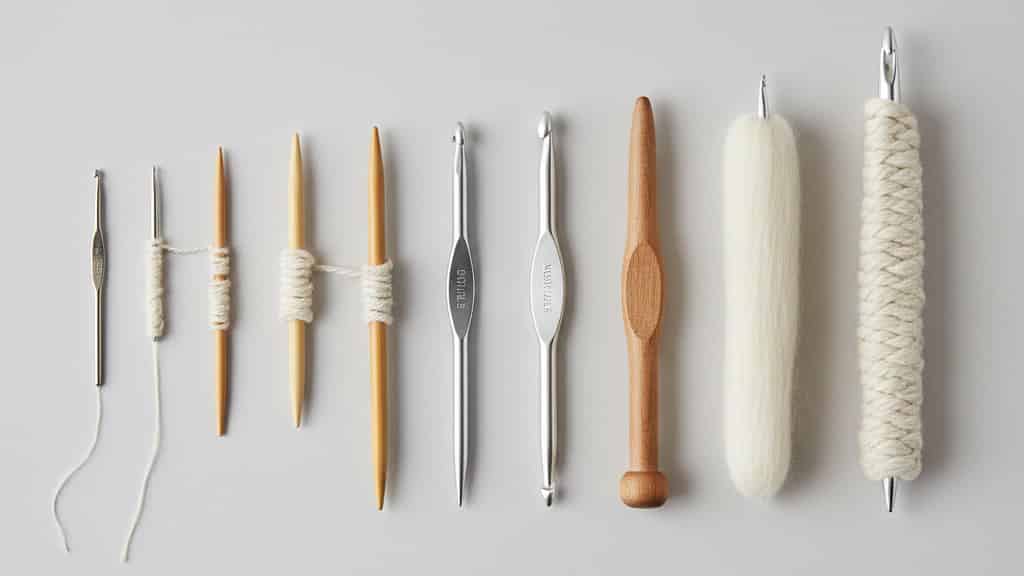
Matching Needles and Hooks to Your Yarn
Different yarn weights need different size needles or hooks. It’s kind of like how you wouldn’t use a massive spoon to eat soup – the tool needs to match the task.
The yarn label will give you a recommendation, usually a range. For example, worsted weight yarn might say “US 7-9 needles” or “5-5.5mm hook.” This is a starting point, not a law. Some people naturally knit or crochet more tightly, so they need bigger needles. Others work more loosely and need smaller needles.
This is why making a gauge swatch is important – it tells you whether the recommended needle size works for you or whether you need to go up or down a size. I know, I know, I keep mentioning gauge. But it really does matter! Check out our gauge calculator before starting any project where size matters.
If you’re working with patterns from different countries, you might run into confusion with needle sizes. The US uses one numbering system, the UK uses another, and most of the world uses metric measurements. Our needle converter tool translates between all these systems instantly, so you can follow any pattern from anywhere in the world without confusion.
Choosing the Perfect Yarn for Your Very First Project
Alright, let’s get practical. You’re standing in the yarn aisle (or browsing online) and you’re ready to buy yarn for your first project. What should you choose?
1. Stick with Worsted Weight Seriously, make your life easier and start here. It’s the most common weight, the easiest to work with, and has the most beginner-friendly patterns available. You can always experiment with other weights later.
2. Choose a Light or Medium Color This sounds weird, but it matters! When you’re learning, you need to be able to see your stitches clearly. If you choose black or very dark yarn, it’s really hard to see where to put your needle or hook, especially in lower light. Light or medium colors show your stitch definition much better.
That said, avoid anything variegated or multicolored for your first project. Those are beautiful, but they can hide your stitches and make it hard to spot mistakes. Stick with a solid color for now.
3. Pick Smooth, Simple Yarn There are all kinds of fun specialty yarns out there – fuzzy ones, sparkly ones, ones with little pompoms built in. They’re cool! But they’re a nightmare for beginners. When you’re learning, you’ll probably need to rip out your work and start over at some point (it’s totally normal). Novelty yarns are really hard to rip out and reuse.
Stick with smooth, plain yarn. It might seem boring, but you’ll actually be able to see what you’re doing, and it’s much more forgiving.
4. Don’t Break the Bank Start with acrylic or an acrylic blend. Like I said before, you’re going to make mistakes while learning. That’s the whole point of practicing! Don’t put pressure on yourself by using expensive yarn. Save the luxury fibers for when you’re more confident.
Good beginner-friendly brands include Red Heart Super Saver, Caron Simply Soft, Lion Brand Vanna’s Choice, and Bernat Super Value. These are all widely available, affordable, and easy to work with.
5. Make Sure It’s Machine-Washable Trust me, you don’t want to hand-wash your practice pieces. Choose yarn that can go in the washing machine. This usually means acrylic, cotton, or certain washable wool blends. Check the label for care instructions.
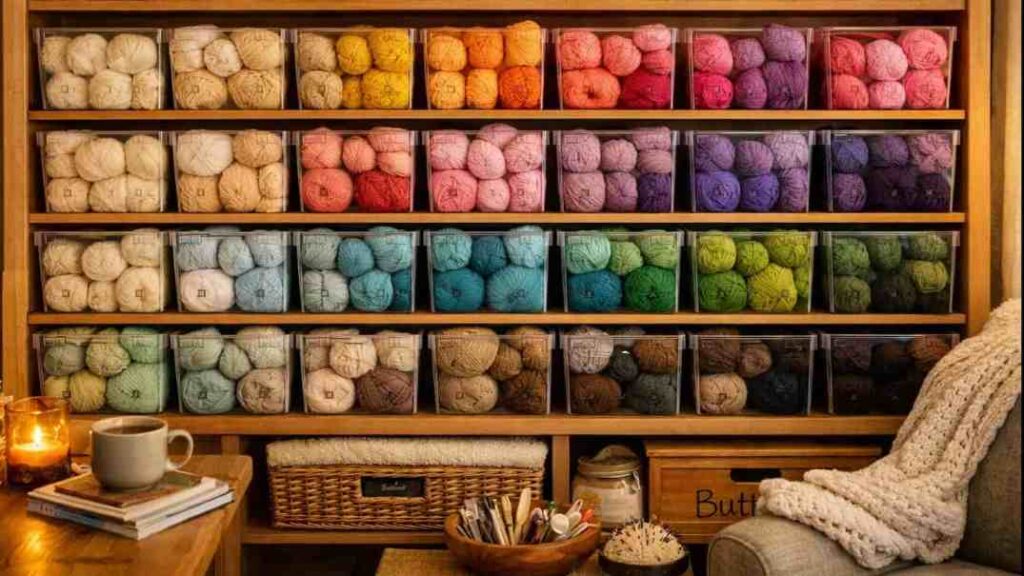
Storing Your Yarn Properly
Once you start collecting yarn (and you will – it’s addictive!), you need to store it properly. Yarn can get damaged by light, moisture, dust, and pests. Here’s how to keep it in good condition.
Keep It Cool and Dry Humidity and heat are not yarn’s friends. Store your yarn in a climate-controlled area of your home. Avoid basements that might get damp, attics that might get hot, or anywhere with direct sunlight that can fade the colors.
Use Breathable Storage Don’t seal your yarn in airtight plastic containers – yarn needs to breathe, especially natural fibers. Use fabric bins, wooden crates, open shelves, or breathable storage bags. Those clear zippered bags you get from the bedding store work great.
If you are using plastic bins, don’t seal them completely. Leave the lid slightly ajar or poke some holes for air circulation.
Protect Against Moths If you have wool or other animal fiber yarn, you need to protect it from moths. These little insects love to munch on natural fibers. Use cedar blocks, cedar rings, or lavender sachets in your yarn storage. Both cedar and lavender naturally repel moths. Replace them every few months when they lose their scent.
Keep Labels Attached Don’t throw away those yarn labels! Keep them with the skeins at least until you’ve finished your project. The label has all the important information – fiber content, yardage, dye lot, and care instructions. You might need that information later.
Some people slip the label onto a binder ring and loop it through the center of the yarn ball. Others keep a notebook with labels taped in and notes about what they used the yarn for.
Wind It Up If you buy skeins (those twisted circles of yarn), you’ll need to wind them into balls before using them. Trying to knit directly from a skein is a recipe for tangles and frustration. You can wind by hand, use a toilet paper tube as a center, or invest in a yarn winder and swift (tools that make winding faster and easier).
Some yarn comes in pull-skeins or center-pull balls, which you can use directly. Just pull from the center of the ball rather than the outside to prevent rolling.
Common Beginner Mistakes (And How to Avoid Them)
Let’s talk about the mistakes almost everyone makes when they’re starting out. I’ve made all of these myself, so there’s no judgment here – just helpful advice so you can skip the frustration!
Mistake #1: Not Buying Enough Yarn This is huge. You find the perfect pattern, buy what you think is enough yarn, start your project, and then… you run out three-quarters of the way through. And of course, the store is now sold out of that color, or they only have a different dye lot.
Always round up when estimating yarn. If a pattern calls for “approximately 400 yards,” buy 500. If it says “2-3 skeins,” buy 3. The extra cost of one more skein is way less than the heartbreak of an unfinished project.
And remember our yardage calculator? Use it! It takes the guesswork out of estimating.
Mistake #2: Ignoring Gauge Completely I get it. Making a gauge swatch seems tedious and boring. You just want to jump into your project! But here’s what happens when you skip gauge: you finish your sweater and it fits a toddler. Or you make a blanket that could cover a football field.
Gauge matters for anything where size is important. If you’re making a scarf or a shawl where the exact dimensions don’t matter much, sure, skip the gauge swatch. But for garments, fitted accessories, or anything that needs to be a specific size? Make. The. Swatch.
It takes maybe 20 minutes, and it could save you from wasting 20 hours on a project that doesn’t fit. Use our gauge guide to learn exactly how to check your gauge and what to do if it’s off.
Mistake #3: Choosing the Wrong Fiber for the Recipient Your best friend mentioned she’s cold all the time, so you decide to knit her a beautiful wool sweater. Sweet, right? Except she’s allergic to wool and can’t wear it. Oops.
Before you commit to a big project for someone else, find out:
- Are they allergic to any fibers?
- Are they willing to hand-wash items, or do they need machine-washable?
- Do they actually like wearing handmade items?
- What’s their style and color preference?
It sounds like a lot, but a quick “Hey, I’m thinking of making you something, any fiber allergies?” conversation can save you from making something that never gets used.
Mistake #4: Starting with a Project That’s Too Ambitious I love your enthusiasm, but please don’t make a complex cable-knit sweater as your very first project. Start simple. Like, really simple. A dishcloth, a scarf, a simple hat – these are perfect first projects. They teach you the basics without being overwhelming.
You can work up to the fancy stuff! But if you start with something too complicated, you’ll get frustrated and might give up entirely. And that would be sad, because crafting is actually really fun once you get past the initial learning curve.
Mistake #5: Not Reading the Pattern All the Way Through First This one gets everyone at least once. You start a pattern, you’re cruising along, and then suddenly there’s an instruction that makes no sense, or you realize you were supposed to do something 10 rows ago, or you don’t have the right materials.
Before you cast on or make your first chain, read the entire pattern. Make sure you understand all the abbreviations. Check that you have all the materials. Note any special techniques you might need to look up. This saves so much frustration later.
Mistake #6: Splitting Your Yarn This happens when your needle or hook pierces the yarn strand itself instead of going through the space of the stitch. It’s super common with beginners because you’re still learning where exactly to insert your needle.
Some ways to minimize splitting:
- Use the correct size needle for your yarn (not too small)
- Choose smooth needles (not ones with rough spots that catch)
- Pay attention to where you’re inserting your needle
- Use plied yarn rather than single-ply when you’re learning
- If a particular yarn is driving you crazy with splitting, switch to a different one
Mistake #7: Comparing Yourself to Others You see someone’s finished project on Instagram and it’s gorgeous and perfect and yours looks like a lumpy mess. Stop right there. That person has probably been crafting for years. You’re a beginner. It’s totally normal for your first projects to look rough around the edges.
Every expert was once a beginner. Every beautiful project started with someone who made wonky scarves and dropped stitches. Be patient with yourself. Your skills will improve with every project.
Mistake #8: Not Asking for Help If you’re stuck, ask for help! There are so many resources:
- YouTube tutorials (seriously, you can find a video for basically any technique)
- Local yarn shops often offer classes or free help
- Online forums and communities (like Reddit’s r/knitting or r/crochet)
- Friends who already know how to knit or crochet
Don’t suffer in silence trying to figure something out for hours when someone could explain it in two minutes.
Building Your Yarn Stash (Yes, It’s Inevitable!)
Here’s something they don’t tell you when you start knitting or crocheting: you’re going to end up with way more yarn than you have projects for. It just happens. One day you’ll look around and realize you have enough yarn to knit blankets for the entire neighborhood.
This collection is called your “stash,” and it’s totally normal. In fact, it’s a source of pride for many crafters! But let’s talk about building a stash wisely rather than just randomly accumulating yarn.
Buy What You Love If you see yarn that makes you happy – the color is perfect, it feels amazing, whatever – buy it. Even if you don’t have a specific project in mind. Inspiration will strike eventually, and you’ll be glad you have that gorgeous yarn waiting for you.
Take Advantage of Sales Yarn can get expensive, especially the good stuff. Watch for sales, use coupons, and stock up when prices are good. Many yarn shops have big sales in January and July. Online retailers often have seasonal sales too.
Just don’t buy yarn just because it’s on sale if you don’t actually like it. “It was cheap” is not a good reason to have yarn you’ll never use.
Organize by Weight and Fiber When your stash starts growing, organize it in a way that makes sense to you. Many people organize by yarn weight (all the worsted together, all the bulky together, etc.) and then by color within each weight. This makes it easy to find what you need when you’re planning a project.
Some people organize by fiber type or by project type (sock yarn, sweater yarn, etc.). Find what works for you.
Keep an Inventory This might sound over the top, but once you have a decent-sized stash, it’s easy to forget what you have. You might end up buying duplicate yarn or forgetting about perfect yarn hiding in the back of a bin.
You can keep a simple spreadsheet or use one of the many yarn stash apps available (Ravelry has a great stash feature, and there are apps like Yarn Stash and Yarn Buddy). Note the brand, color, weight, yardage, and where it’s stored.
Don’t Feel Guilty Here’s the thing: non-crafters might not understand your yarn collection. They might ask why you need so much, or tease you about your “yarn problem.” Ignore them.
Your yarn stash is an investment in your hobby and your creativity. It’s no different from a painter having lots of paints or a baker having a well-stocked pantry. As long as your yarn budget is reasonable for your financial situation and it makes you happy, you’re fine.
Plus, having yarn on hand means you can start a new project whenever inspiration strikes. You don’t have to wait for a trip to the store or wait for shipping. That spontaneous creativity is valuable!
Use It, Don’t Just Collect It That said, yarn is meant to be used, not just admired. If you find yourself buying more and more without actually making anything, that might be a sign to slow down on the buying and focus on the making for a while.
Some crafters set stash goals, like “no new yarn until I finish three projects” or “only buy yarn if I have a specific pattern in mind.” Find what works for you.
Special Considerations for Different Project Types
Different projects work better with different yarns. Here’s a quick guide:
For Wearables (Sweaters, Hats, Gloves) Choose soft yarn that feels good against skin. Consider washability – will this need to be hand-washed, or should it be machine-washable? Think about warmth – wool and alpaca for winter items, cotton or bamboo for summer items. Make sure to check gauge carefully since fit matters!
For Baby Items Machine-washable is a must. Parents don’t have time for hand-washing. Soft is important, and avoid anything with mohair or other fibers that could shed into a baby’s mouth. Avoid complicated stitches with big holes where tiny fingers could get caught. Acrylic, cotton, and washable wool blends are all great choices.
For Blankets Durability matters here, along with washability. The yarn should be soft since it’ll be against skin. For afghans that will get lots of use, acrylic holds up really well. For decorative throws, you can use fancier fibers. Consider weight too – bulky yarn makes blankets work up fast, but they’ll be heavier.
For Kitchen Items (Dishcloths, Washcloths, Towels) Cotton all the way! It’s absorbent, washable, and can handle being bleached if needed. Don’t use acrylic for items that will touch heat (like pot holders) because it can melt.
For Bags and Totes You want something sturdy that won’t stretch out. Cotton is great. Avoid very elastic fibers like acrylic or wool unless you line the bag. Consider how it’ll be washed – a market bag will get dirty!
For Toys (Amigurumi, Stuffed Animals) Safety first! Make sure there are no small parts that could come off. Choose machine-washable yarn because toys get dirty. Acrylic works great for toys. Make sure your stitches are tight so stuffing doesn’t show through or poke out.
Understanding Yarn Terminology You’ll Hear
As you get into the crafting world, you’ll hear some terms thrown around. Here’s what they mean:
Ply – This refers to how many strands are twisted together to make the yarn. But confusingly, ply doesn’t directly correlate to thickness. You can have a thin 4-ply and a thick single-ply. It’s about construction, not weight.
Hank vs. Skein vs. Ball – These are different ways yarn is packaged. A ball is wound into a round shape you can pull from the outside. A skein is either a twisted oblong shape (which needs to be wound before using) or a pre-wound pull-skein. A hank is a big twisted loop that definitely needs winding before use.
Superwash – This means the wool has been treated so it won’t felt or shrink in the washing machine. Superwash wool is awesome because you get the benefits of wool plus easy care.
Mercerized – Usually refers to cotton that’s been treated to make it shinier and stronger. Mercerized cotton has a slight sheen and is really nice for summer garments.
Kettle-Dyed or Hand-Dyed – Yarn that’s been dyed in small batches, often with slight color variations. It’s usually more expensive but can be really beautiful. Be aware that hand-dyed yarn can sometimes bleed or fade more than commercially dyed yarn.
Colorway – The specific color or color combination. The same yarn might come in 50 different colorways.
Frogging – Ripping out your work (rip-it, rip-it, sounds like a frog!). Don’t worry, everyone does this. A lot.
Taking Care of Your Finished Projects
Alright, you’ve finished your project! Now what? How you care for it depends on what fiber it’s made from.
Always Check the Label Remember that care label from the yarn? This tells you how to wash your finished item. Follow those instructions! Different fibers need different care.
Washing Wool and Animal Fibers Most wool needs to be hand-washed in cool water with a gentle detergent meant for wool. Don’t agitate it or rub it – that can cause felting (where the fibers mat together permanently). Gently squeeze out water, don’t wring. Lay flat to dry, reshaping it to the correct dimensions. Never hang wool items to dry – they’ll stretch out.
Exception: Superwash wool can usually go in the washing machine on gentle cycle.
Washing Cotton and Plant Fibers Most cotton can be machine-washed, but check the label. Hot water can cause shrinkage. Lay flat or tumble dry low. Cotton items can sometimes grow or stretch with wear, so you might need to reshape them while drying.
Washing Acrylic Machine-wash on gentle cycle, tumble dry low. Easy peasy. This is why acrylic is so practical!
Blocking This is a technique where you wet or steam your finished item and pin it into shape while it dries. It can make a huge difference in how the finished project looks – evening out stitches, opening up lace patterns, making edges lay flat. It sounds complicated, but it’s really just getting the item wet and shaping it. You can learn more advanced blocking later, but for now, just know it exists.
Storage Fold knitted and crocheted items, don’t hang them (except scarves). Hanging can stretch out the fabric. Store with cedar or lavender if they’re wool to protect from moths. Keep them clean – moths are attracted to body oils and food stains.
Your Next Steps
Okay, you’ve made it to the end of this guide! You now know more about yarn than 90% of non-crafters. So what should you do now?
1. Go Buy Your First Yarn Head to a craft store or yarn shop (or browse online) and pick out yarn for your first project. Remember: worsted weight, light color, smooth texture, acrylic or cotton, machine-washable. Pick a color that makes you happy!
2. Find a Beginner Pattern Look for a simple pattern labeled “beginner” or “easy.” A basic scarf or dishcloth is perfect. Make sure you understand the abbreviations and techniques needed before you start.
3. Check Your Gauge (If It Matters) If you’re making something where size matters, make a gauge swatch. Use our gauge calculator to check if you’re on track. If not, don’t worry – just adjust your needle size and try again.
4. Use Your Tools Remember all those helpful tools I mentioned? Use them! The stitch counter helps you keep track of rows. The yardage calculator helps you estimate how much yarn you need. The needle converter helps with international patterns.
5. Be Patient with Yourself Your first project probably won’t be perfect. That’s totally okay! You’re learning a new skill, and that takes time. Don’t compare your beginning to someone else’s middle or end.
6. Join a Community Crafting is more fun when you can share it with others. Look for a local knitting or crochet group, join online communities, or take a class at your local yarn shop. The crafting community is generally super welcoming and helpful.
7. Keep Going Finish that first project, even if it’s wonky. There’s something really satisfying about completing something you made with your own hands. Then start your second project. And then your third. Each one will be better than the last.
Final Thoughts
Understanding yarn might seem like a lot to take in at first, but you don’t need to memorize everything right away. Start with the basics – pick a worsted weight acrylic in a light color, grab the recommended needle size, and try a simple project. As you gain experience, all of this information will start to make more sense.
The most important thing is to just start. Pick up some yarn and needles or a hook, find a simple pattern, and dive in. You’ll make mistakes, and that’s totally fine. Every expert was once a beginner who kept going despite the mistakes.
Remember, at its heart, working with yarn is about creating something with your hands. It’s relaxing, meditative, and creative. Whether you end up making gifts for everyone you know, creating a massive stash of scarves for yourself, or just enjoying the process of making something, you’re going to love this craft.
The yarn world is huge and varied and wonderful. There’s always something new to learn, a new technique to try, a new fiber to experiment with. But for now, you have everything you need to get started.
So grab some yarn, settle in with your needles or hook, and make something! Your crafting journey starts now, and I’m excited for you.
Happy crafting! And remember – when in doubt, check our gauge guide, use our helpful calculators, and don’t be afraid to ask for help. We’re all in this together, one stitch at a time.
Ready to start your first project? You’ve got this! Save this guide and come back to it whenever you have questions. And most importantly, have fun and enjoy the creative process. Before you know it, you’ll be helping other beginners figure out their yarn choices!